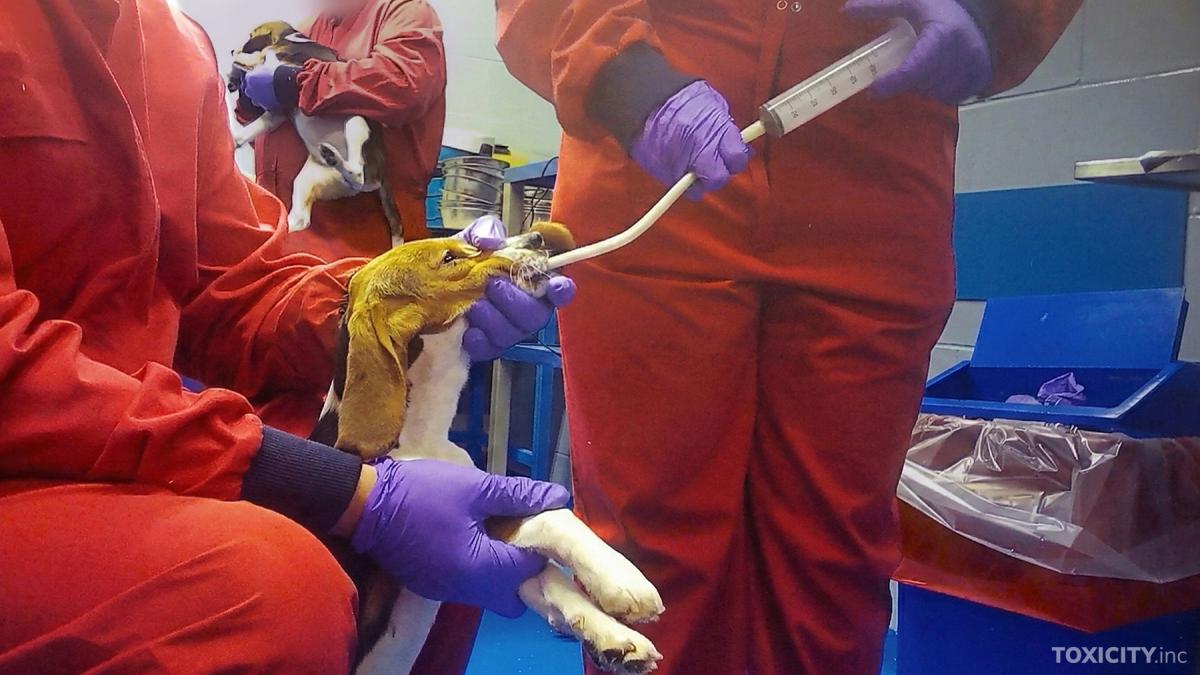
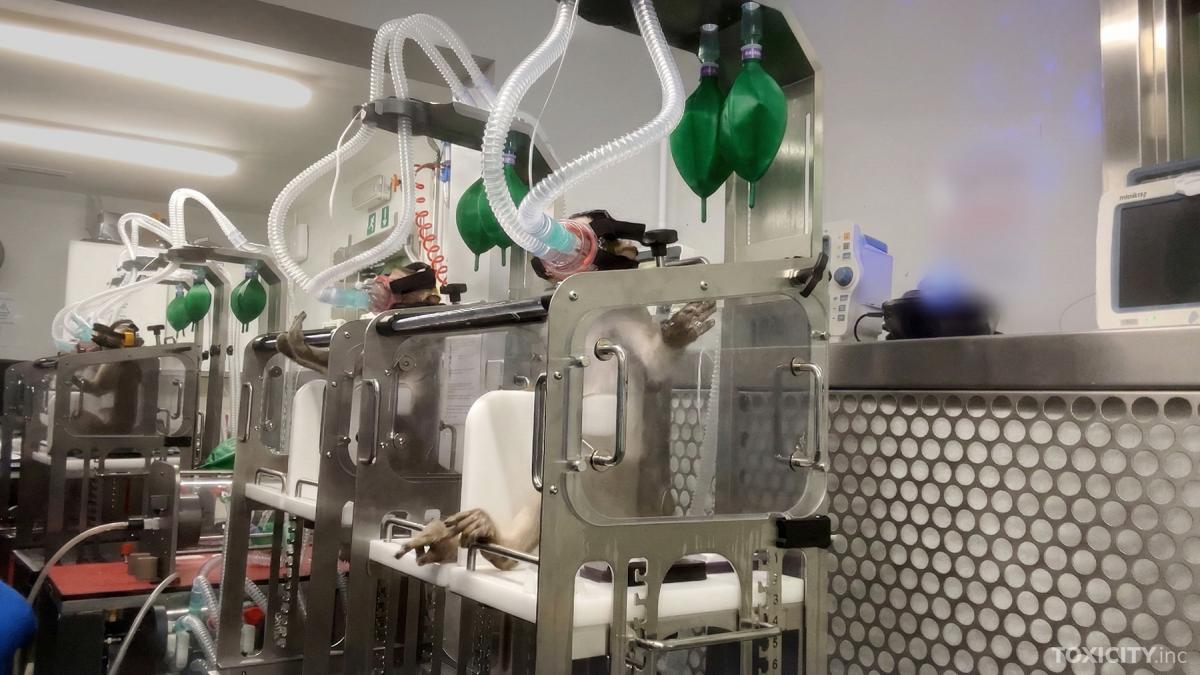
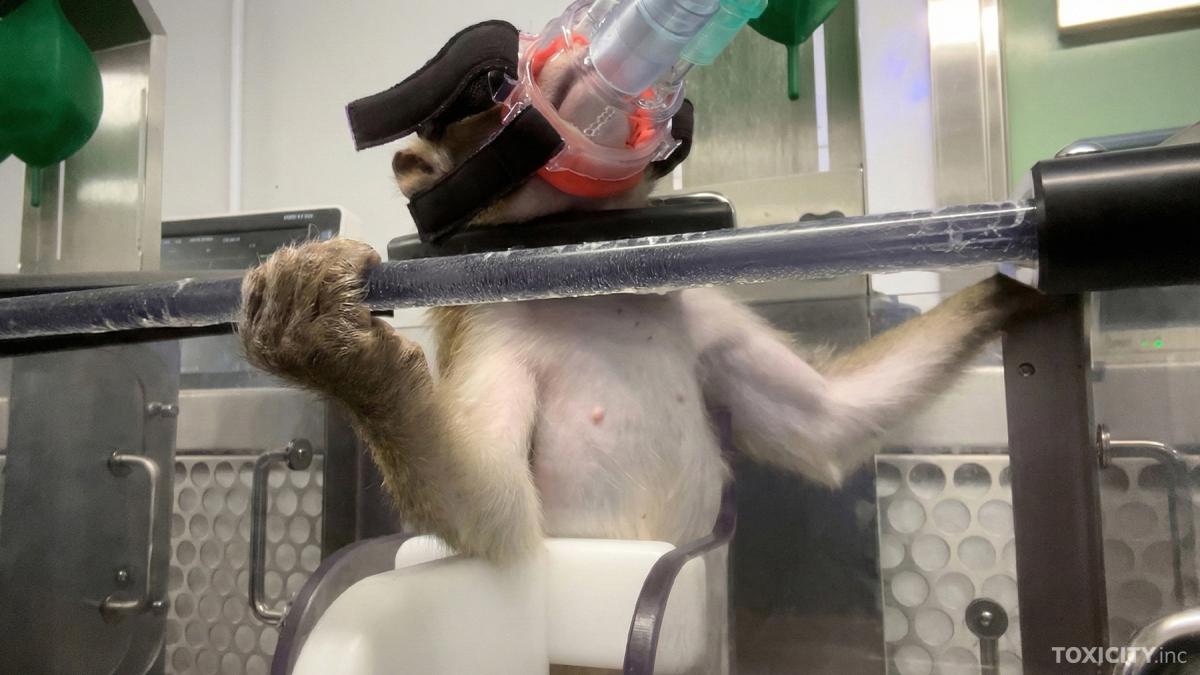
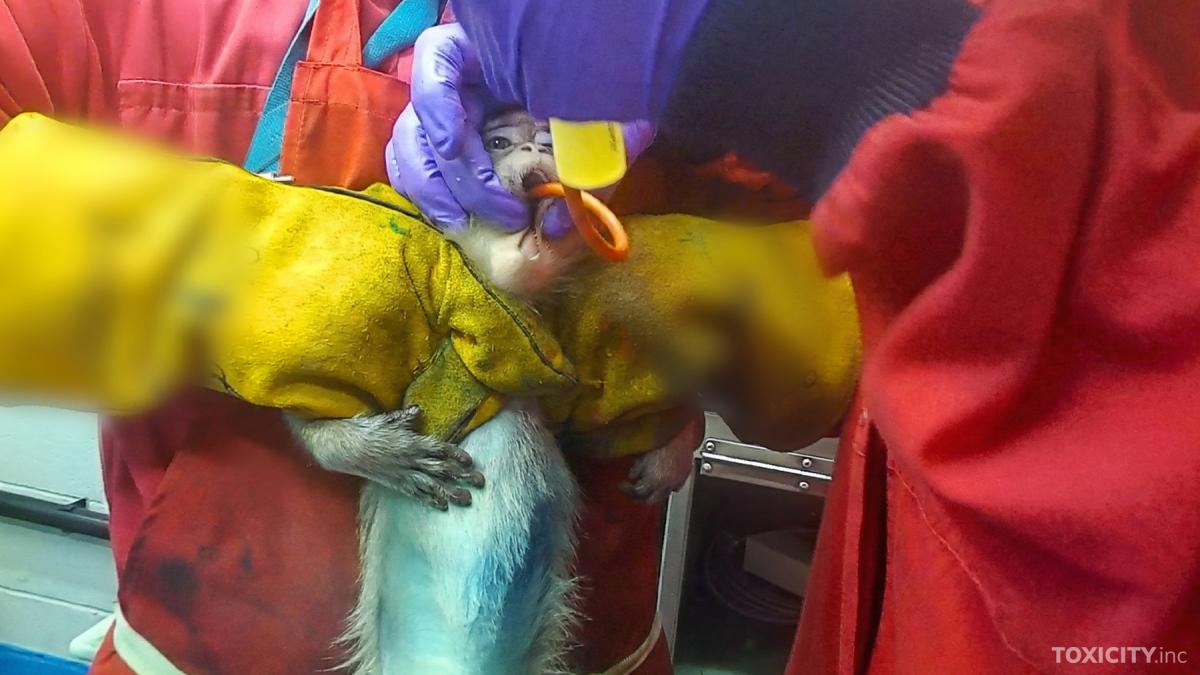
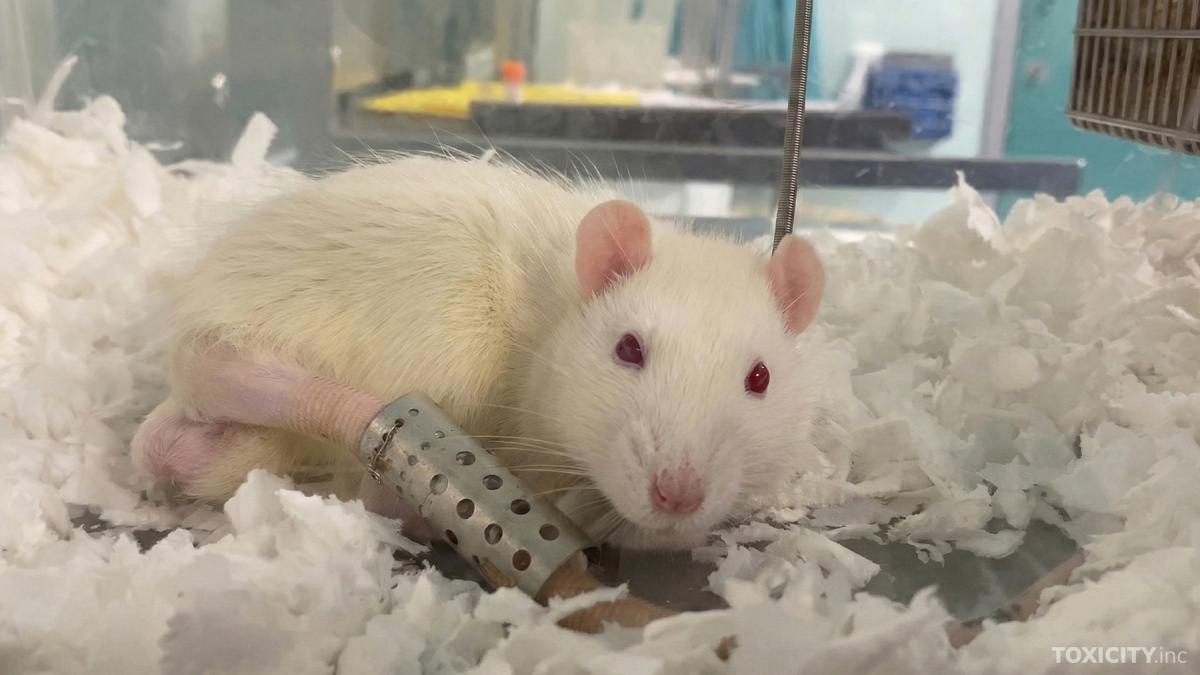
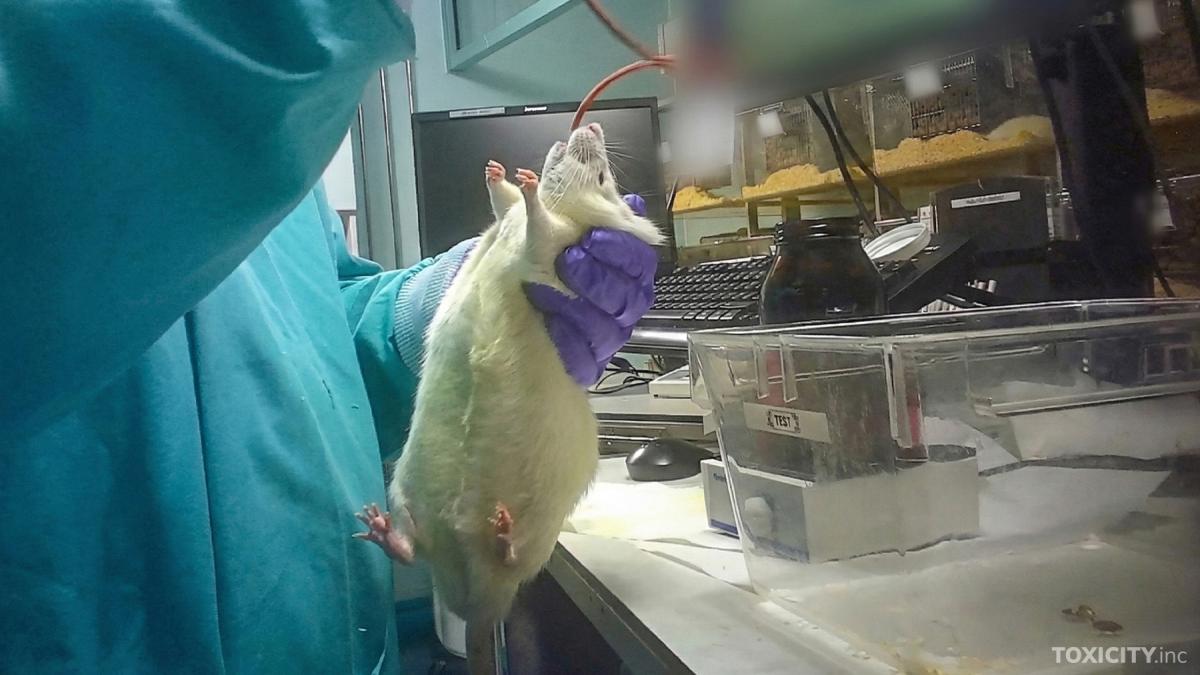
Rats, rabbits, dogs, pigs, non-human primates… The footage shows animals used in tests designed to measure the harmful effects of substances. Injections, forced inhalation, tube feeding, skin exposure: these procedures aim to determine the dose at which a substance causes adverse effects, disease, or even death.
Behind technical terms such as “safety tests” or “risk assessments” lies a reality of extreme violence. Animals are confined to cages, repeatedly handled, subjected to gruelling procedures, and then killed at the end of the tests — including when they have survived the procedures.

In some cases, animals may be exposed to doses up to 100 times higher than those human beings would realistically encounter. These tests are used in the development of medicines, but also for certain industrial chemicals, pesticides, and some food additives.
Images that break the silence
These revelations also highlight the deep moral unease that exists even within laboratories themselves. If this footage has come to light, it is because people confronted every day with animal suffering decided to sound the alarm.
For GAIA, their action underscores one essential point: even in environments where such practices have become normalised, animal suffering remains impossible to ignore.

Belgium, too, continues to use animals in this type of testing. In 2024, a total of 387,237 animals were used in animal experiments in Belgium — more than a thousand animals a day. Of these, 3,678 were used specifically for toxicity tests, just under one percent of all animals used. The figures vary considerably from one region to another.

In Brussels, 92 animals were used in 2024, compared with 110 in 2023. These were food-related tests, carried out mainly on mice and guinea pigs.
In Wallonia, 566 animals were used in 2024, compared with 519 in 2023. The available data provide an overview of the number of animals used, but not always of the exact species involved in each type of test.
Flanders recorded the highest level of activity: 3,020 animals were used in 2024, compared with 2,158 in 2023. Official reports show that dogs, cats and non-human primates are used in animal experiments there, but without clearly indicating which species are involved in which categories of tests.