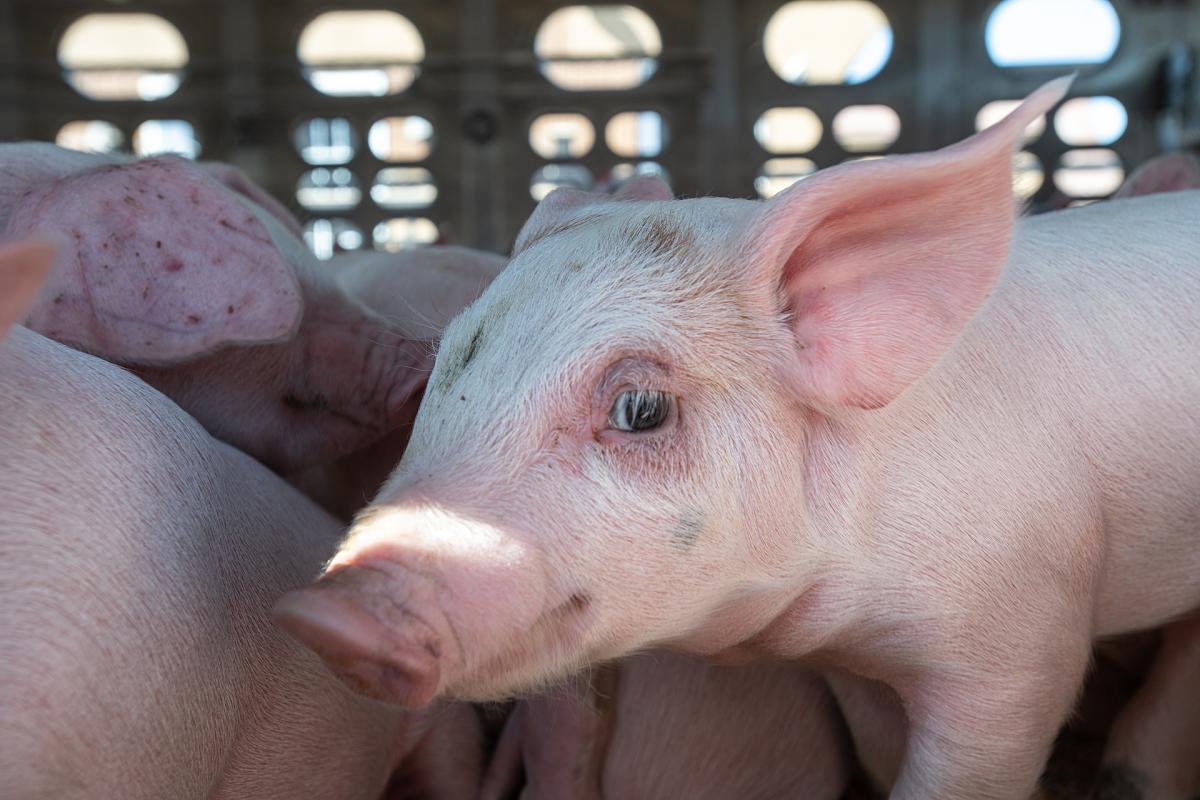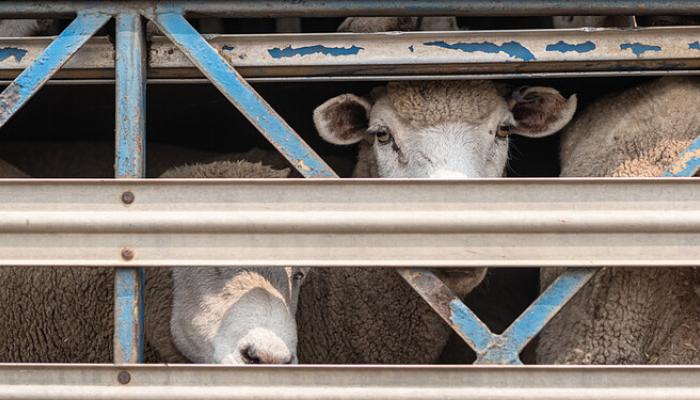
Lambs transported at just seven days old, unweaned calves facing journeys of almost 40 hours: the ongoing European negotiations on animal transport are taking an alarming turn. GAIA calls on Belgium’s three regional animal welfare ministers to defend an ambitious reform and reject any agreement that would weaken the proposed protections.
Every year, 1.6 billion live animals are transported within or from the European Union. For the cows, pigs, sheep, goats, chickens and other birds involved, these journeys cause stress, exhaustion, dehydration, injuries and severe suffering. According to estimates based on mortality rates observed in scientific studies, more than 5.5 million animals die during these journeys each year.
The revision of EU legislation was intended to reduce this suffering. Presented in December 2023, the Commission’s proposal included shorter journey times, more space for animals and somewhat better protection against extreme temperatures. But the compromises currently under discussion threaten to undermine these advances, and negotiations are gathering pace under the Irish Presidency of the Council of the European Union. A political agreement is being considered as early as 16 December 2026.
Very young animals, very long journeys
Among the most concerning proposals are the transport of lambs from just seven days old and journeys approaching 40 hours for unweaned calves. For these calves, this would be more than double the 19 hours set out in the Commission’s original proposal.
Other provisions under discussion would relax the journey time limits proposed by the Commission. Protection against extreme temperatures also remains inadequate, despite
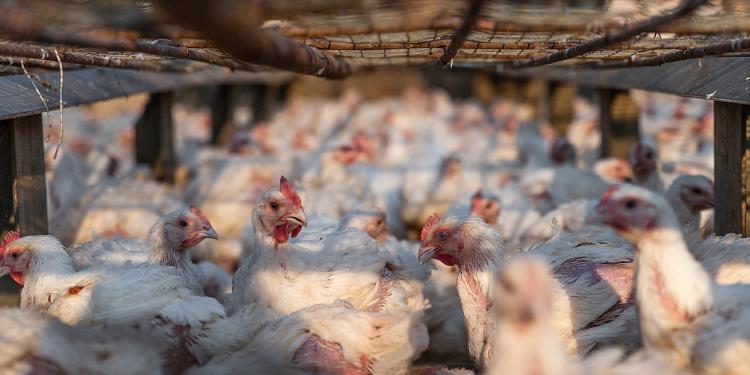
investigations documenting transport in temperatures reaching 45°C.
Europe has an opportunity to put an end to entirely avoidable animal suffering. Instead, some policymakers are seeking to maintain practices that scientific evidence tells us we should abandon. This would be an unacceptable step backwards.
Benoît Cassart’s amendments
GAIA also condemns the amendments supported by Belgian MEP Benoît Cassart (MR), which seek to block the expected improvements in animal protection.
His professional activities in livestock farming and animal insemination also raise questions about a possible conflict of interest. A fellow MEP has initiated proceedings on this matter with the competent European bodies.
Belgium must act
GAIA calls on Elke Van den Brandt (Groen), Adrien Dolimont (MR) and Ben Weyts (N-VA), the three regional ministers responsible for animal welfare, to take responsibility.
The organisation asks them to oppose longer journey times and weaker protections, and to reject any agreement that would represent a step backwards from the Commission’s original proposal. If no compromise offering sufficient protection is possible, Belgium must support postponing the negotiations.
Citizens’ expectations are clear: according to a European survey published in 2026, 82% of respondents are concerned about animal welfare during transport. More than 93,000 European citizens have also signed an open letter to MEPs calling for stronger animal protection legislation.
This reform must mark a historic step forward. It must not become a licence to inflict even more suffering on animals. Belgium must act now, before it is too late.